OUR APPROACH

Work directly with senior healthcare AI engineers on a product idea, an AI feature, or a system that needs work. We design your data and AI layers together, test the workflow in simulation, and build it with you. You own the deliverables.

The method
  1. SOLUTION DESIGN01 / 04

    Design

    Design the data and AI layers as one system, with a clear scope and a testable definition of success.

    Inputs
    • Your product idea, requested feature, or existing engineering issue
    • Intended users, workflows, data schemas, source systems, and access requirements
    • Clinical, security, and review requirements relevant to the intended use
    Method
    • Map how data reaches each clinical or business decision, including its source, meaning, freshness, and permissions
    • Identify data quality gaps and plan how to handle missing, conflicting, or outdated records
    • Select suitable AI components and design data pipelines, retrieval, integrations, and human-review boundaries
    • Agree the delivery scope, acceptance criteria, and scenarios the proof must test
    Decision gate
    Proceed only when you approve the architecture, delivery scope, and acceptance criteria, including what needs human review.
    Deliverable

    Engineering Blueprint

    Your data flow map, AI architecture, data quality plan, evaluation criteria, and scoped delivery sequence.
  2. PROOF GATE02 / 04

    Prove

    Test the design end to end with synthetic data and mocked integrations before committing to the production build.

    Inputs
    • The Engineering Blueprint and agreed acceptance criteria
    • Workflow descriptions, data schemas, interface specifications, and expected behavior
    • Typical scenarios, edge cases, and failure conditions to simulate; proprietary records are not required
    Method
    • Use our proprietary healthcare data generation suite to create documents, populated databases, and detailed scenarios tailored to your schemas and use case
    • Exercise the design end to end through mocked source systems and the AI layer, including missing fields, conflicting records, delayed updates, and rare scenarios
    • Check generated cases for plausibility and score behavior against independently reviewed expectations on a held-out test set
    • Test failure handling, human escalation, latency, and cost; document coverage and unresolved assumptions
    Decision gate
    Proceed only when the proof meets the agreed criteria within the tested scenarios and you accept the remaining risks and production validation plan. Revise the design or stop if it falls short.
    Deliverable

    Proof Package

    A working proof, generated documents and databases, a reusable scenario suite, scored results, and documented coverage limits and build decision. Simulation establishes design evidence; validation in the intended environment follows before release.

  3. PRODUCTION ENGINEERING03 / 04

    Build

    Turn the tested design into a complete system, integrated and validated for its intended use.

    Inputs
    • The approved Proof Package, architecture, and release criteria
    • Authorized access to the target systems, environments, and data needed for integration and validation
    • Clinical reviewers where relevant, operating owners, and security requirements
    Method
    • Engineer the application, data pipelines, AI components, and production integrations
    • Optimize data quality, retrieval, and latency; implement permissions, audit trails, human-review paths, and recovery controls
    • Carry the proof tests into continuous integration and validate with representative data and users in the intended environment
    • Complete security and operational checks, document the system, and stage the rollout
    Decision gate
    Release only when the system meets the agreed functional, AI quality, security, and reliability criteria in the intended environment, with clinical review where applicable.
    Deliverable

    Production System

    Your source code, integrated software, validation record, operating documentation, and monitoring.

  4. CONTINUOUS ENGINEERING04 / 04

    Improve

    Maintain reliability as models, data, and workflows change, and extend the system with evidence.

    Inputs
    • The operating system, release baseline, and agreed service levels
    • Performance telemetry, user feedback, review decisions, and incidents
    • New requirements and candidate model or software updates
    Method
    • Monitor data quality, freshness, AI output quality, latency, cost, and human-review load
    • Turn production findings into regression tests and new simulated scenarios
    • Evaluate model and software changes before rollout, with rollback controls
    • Prioritize maintenance and new capabilities with your team
    Decision gate
    Expand only when evaluation results and production evidence support the change; investigate or roll back when performance falls below the agreed thresholds.
    Deliverable

    Operating Record

    Measured performance, a maintained evaluation suite, documented changes, and a prioritized engineering backlog.

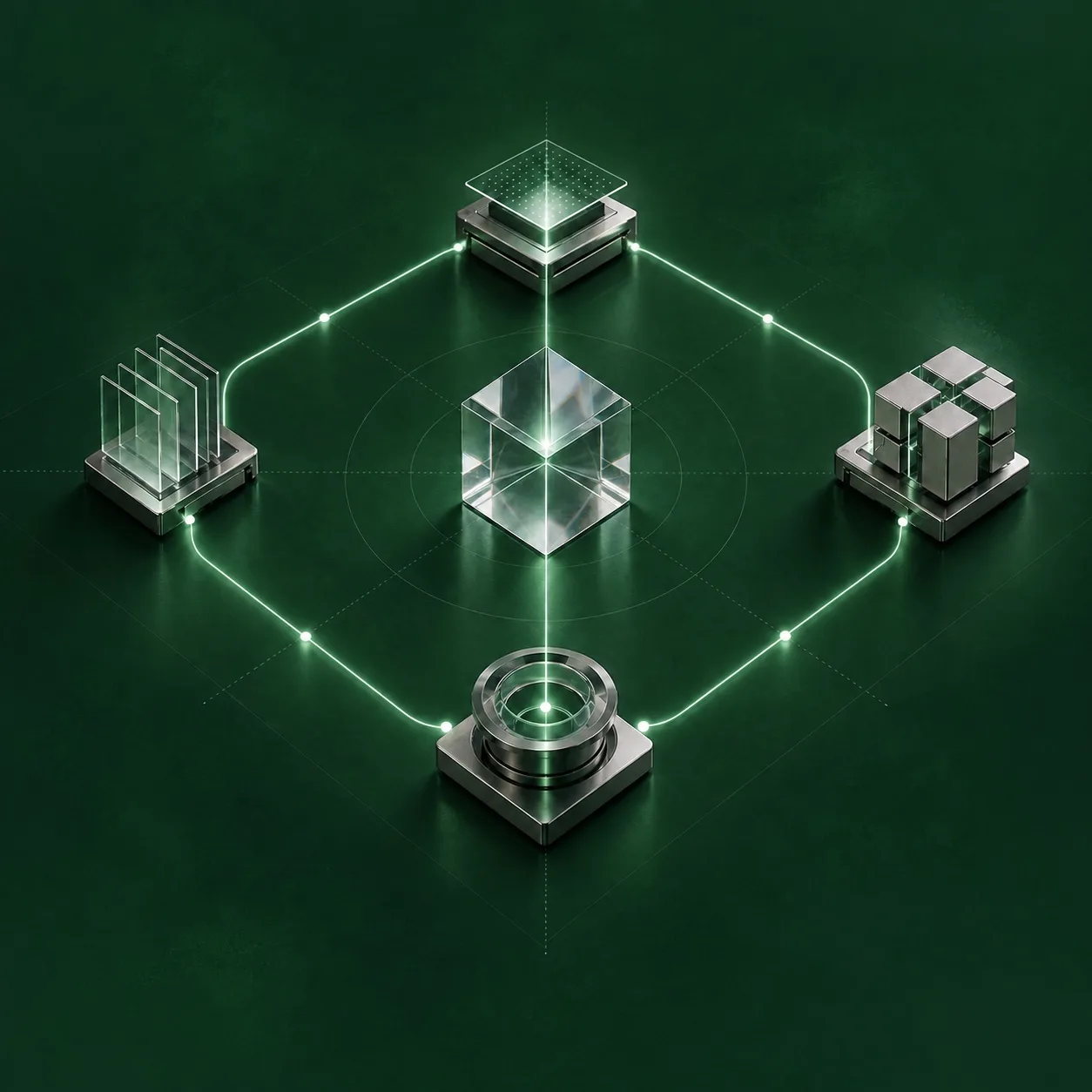
Four precision modules linked by a mint optical path around a glass core
Questions

Choose the outcome, then the path. Launch builds a new AI product you own and sell. Develop brings AI engineering into the healthcare software you already run.

Every output traces, every agent is scoped. Outputs trace to source data, agents run under scoped permissions with human approval gates, and every capability ships an audit trail. Autonomy is set per workflow, with you.

Then we tell you, and you keep everything. We say so and show you why, and you keep the analysis, the prototype and the scope. You learned it at Blueprint cost. The build proceeds only when the evidence clears the bar.

Scoped to your path. The exact scope and fixed price come from the Blueprint. Each path shows its pricing, stages and deliverables before you ask us for anything.

Engineering review

Bring us your engineering challenge.

A product idea, an AI feature, or a system that needs work. Start with a free one-hour engineering review.